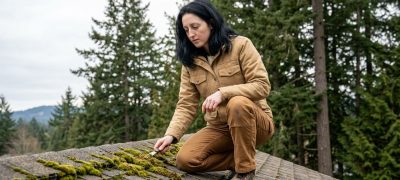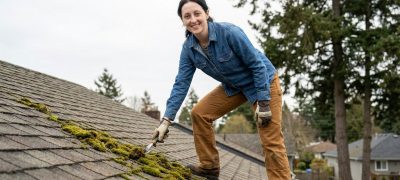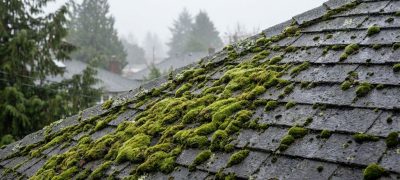

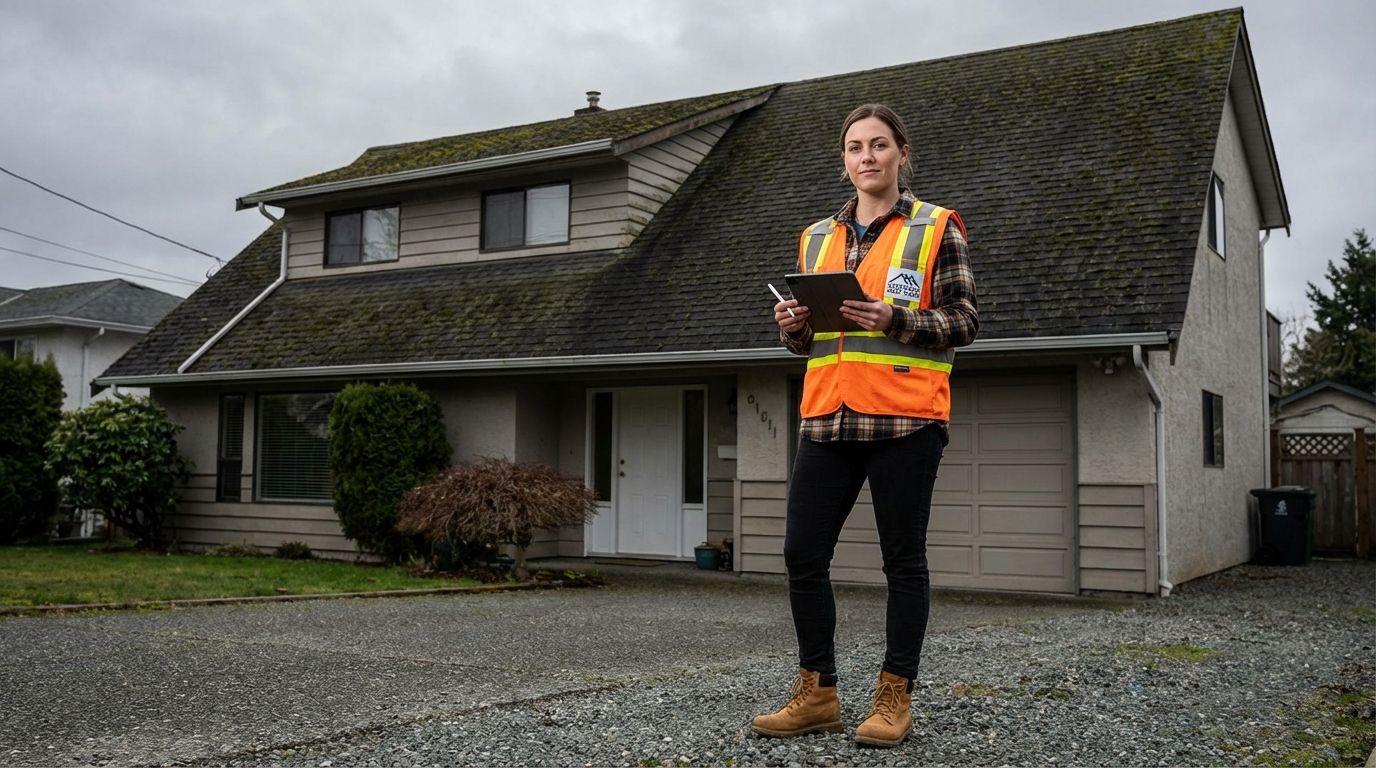
Have you noticed roof moss removal creeping onto your roof, and it feels like it’s getting worse every rainy season in Victoria?
You’re right to pay attention.
RoofMossRemovalVictoria.ca is a local, homeowner-first roof moss removal and roof care resource for Greater Victoria (Victoria, Saanich, Oak Bay, Esquimalt, View Royal, Colwood, Langford, Metchosin, Highlands, Central Saanich, North Saanich, Sidney).
Roof moss removal is a recurring challenge in this region due to long damp seasons, heavy shade, debris buildup, and recurring moss on asphalt shingles.
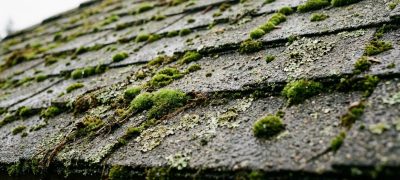
Moss holds moisture, lifts shingles, and can speed up granule loss, which shortens the life of your roof.
I’m Victoria, and I’ve spent over ten years in roof care (working alongside Lipco Ltd). I’ll show you what a proper moss removal service includes, how to protect your shingles, and how to slow moss and algae from coming back.
Key Takeaways
- Skip pressure washing. Industry guidance warns it can damage shingles. A shingle-safe approach uses dry debris clearing, gentle hand removal, then a true soft wash.
- Expect Victoria pricing to vary by roof size, pitch, and access. Many local quotes land around $0.20 to $0.75 per sq ft for roof cleaning/soft wash, with moss removal commonly $0.20 to $0.70 per sq ft. Some Victoria providers list total jobs in the $500 to $1,500 range for many homes.
- Set realistic expectations. In Greater Victoria, it’s common to see 12 to 24 months of visible moss control after a full removal and treatment, then you plan a recheck and possible retreatment.
- Zinc or copper strips can help after cleaning. They work best as prevention, and coverage is limited. On longer roof runs, you may need more than one line to protect the full slope.
- Cleanup is part of the job, not an optional extra. Good crews clear gutters, valleys, and the ground. It’s common to see service minimums around $150 to $250 for basic cleanup, and gutter cleaning is often priced as an add-on.
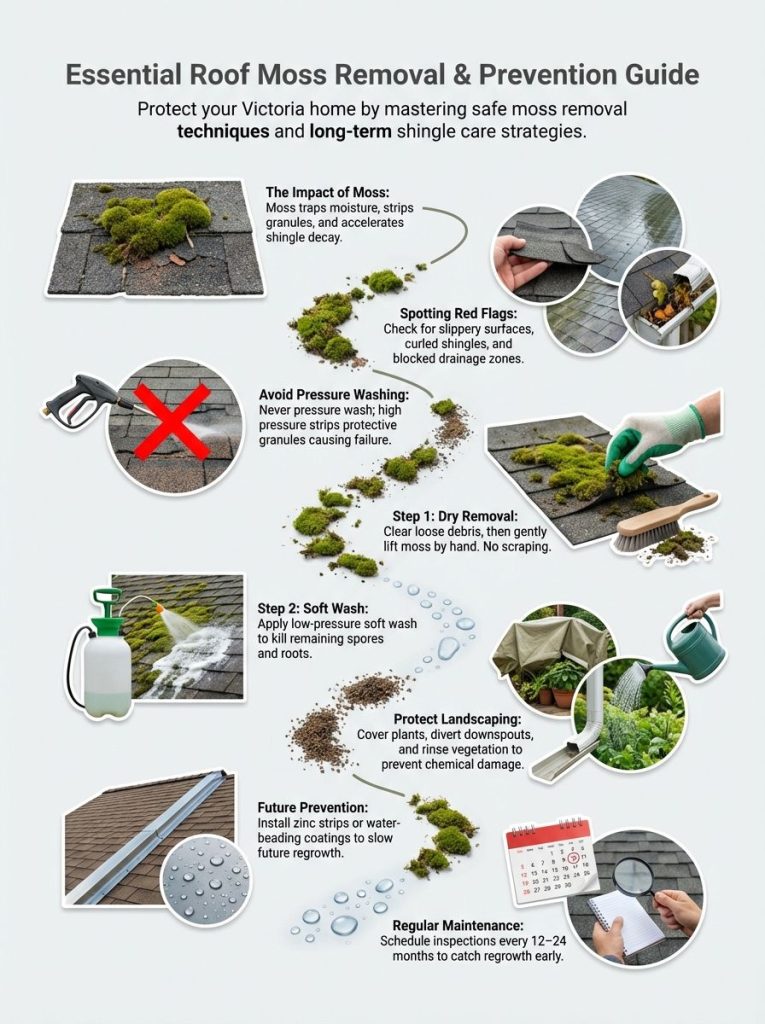
What moss + algae actually do to shingles: moisture hold, granule loss risk, edge lift, staining
In Victoria, moss and algae love the same things you do not: shade, moisture, and a surface that stays damp for long stretches.
Environment and Climate Change Canada’s 1991–2020 climate normals for Victoria Gonzales list about 674.9 mm of precipitation a year, which helps explain why roofs here can stay wet long enough for growth to take hold.
Here’s what that growth does to your roof shingles over time:
- Holds moisture against the roof surface: moss acts like a sponge, keeping the shingle mat damp longer after rain.
- Speeds granule loss risk: asphalt shingles rely on granules to protect the bitumen from sun and wear. When you lose granules, you lose protection.
- Lifts edges and opens seams: thick moss wedges under shingle edges and can create tiny gaps where wind-driven rain can work in.
- Stains and streaks: the dark “algae” streaks homeowners notice are often linked to Gloeocapsa magma, a cyanobacterium that can make roofs look dirty even when the shingles are still structurally fine.
- Blocks drainage: moss and debris can dam valleys and rain gutter channels, leading to water backup and overflow staining.
The goal isn’t just to make your roof look better. It’s to remove growth without scuffing off the granules you’re trying to protect.
Red flags you should not ignore: slippery roof, blocked drainage, shingle curling, heavy shade zones
Most roofs don’t fail all at once. They show you warning signs first.
If you spot any of these, it’s time to move roof moss higher on your to-do list:
- Slippery roof surfaces: moss plus dew is a fall hazard. If you are tempted to climb up, pause. WorkSafeBC rules for workers require fall protection where a fall of 3 m or more may occur, and steeper roofs have extra requirements.
- Blocked gutters or valleys: look for overflow marks, plant growth in rain gutters, or water spilling in one spot during rain.
- Shingle curling and edge lift: lifted edges mean wind can catch shingles, and water can track underneath.
- Heavy shade zones: north-facing slopes and roof sections under trees dry slowly, so moss regrowth is faster there.
- Build-up behind chimneys and around skylights: these are classic moss traps because debris piles up and stays damp.
If you are hiring help, ask them to include gutters, downpipes, and valleys in their inspection notes. Those areas often reveal the real cause of repeat moss growth.
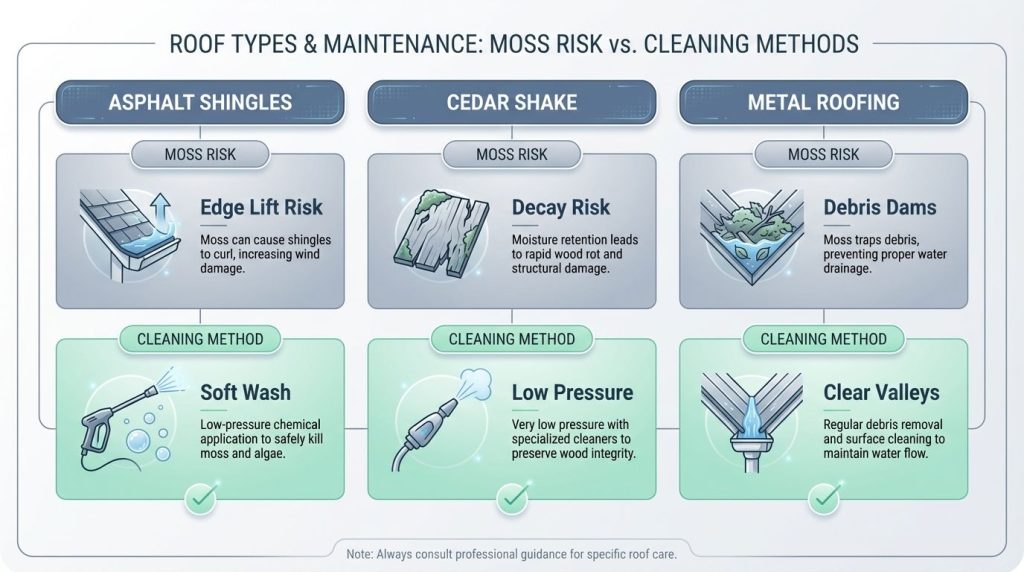
Roof types matter: asphalt vs cedar vs metal (different risk, different method)
Before you remove moss from your roof, you need to know what you’re working on. The safest method changes with the roofing material.
| Roof type | What moss tends to do | Shingle-safe or surface-safe approach |
|---|---|---|
| Asphalt shingles | Moss lifts edges and holds moisture, and aggressive cleaning can strip granules. | Dry debris clearing, gentle hand removal, then soft wash (low pressure) and a follow-up treatment plan. |
| Cedar shake/shingle | Moss and lichen can sit in the wood grain and stay damp, which encourages decay. | Many cedar specialists avoid walking on aged shakes and stick to very low pressure, closer to garden-hose pressure, with careful rinsing. |
| Metal roofing | Moss usually doesn’t root into the metal, but debris dams water and can cause problems at seams and fasteners. | Clear valleys and rain gutters, remove debris gently, and rinse without forcing water under panels. |
Old or brittle surfaces need extra patience. Rushing is how you end up with damage to the roof that costs far more than the original moss removal.
Inspection before removal: shingle condition, flashing, vents, skylights, valleys, gutters
A good roof inspection is what keeps “simple moss removal” from turning into surprise roof repairs.
Before any chemical substance treatment or brushing starts, a crew should check:
- Shingle condition: cracking, brittleness, missing tabs, and exposed fiberglass.
- Flashing and seals: chimneys, plumbing stacks, skylights, and wall transitions.
- Valleys: packed moss, needles, and leaf debris that act like a moisture sponge.
- Gutters and downspouts: blockages, overflow points, and heavy granule buildup.
- Roof pitch and access: this decides the safety plan and whether roof traffic should be limited.
One simple tip I always share: ask for photos of problem areas (valleys, transitions, and any lifted shingle edges). It keeps everyone on the same page and makes follow-up checks much easier.
Shingle-safe removal order: dry debris blow-off → gentle manual lift (no scraping damage)
If you want the roof to last, the order matters. The safest approach removes the stuff that causes abrasion first, then deals with the thick moss.
- Dry debris blow-off: clear leaves, twigs, and loose grit from ridges, valleys, and edges (this reduces accidental scuffing).
- Gentle manual lift of thick moss: lift moss clumps by hand where possible, especially in valleys and along shingle edges. Avoid scraping that digs into the roof surface.
- Soft wash or low-pressure rinse: rinse from top to bottom using a light spray pattern to avoid driving water under shingles.
- Apply a moss/alga treatment: this targets spores and roots that cannot be removed without damaging the shingles.
The direction of your movement matters too. When you brush or rinse, work down the roof, not up under the shingle tabs.
What to avoid: pressure washing, aggressive brushing, harsh angles on shingles
This is where most DIY attempts go sideways: the cleaning tool becomes the damage tool.
A trade bulletin discussed in a June 2014 update from the Asphalt Roofing Manufacturers Association warns against pressure washing and scrubbing because it can damage shingles, and it describes bleach-and-water cleaning methods that use chemistry rather than force.
Quick rule: If the method depends on blasting, grinding, or scraping, it’s not shingle-friendly.
- Avoid pressure washing asphalt shingles: it can strip granules and shorten roof life.
- Avoid aggressive brushing at sharp angles: it can lift shingle edges and remove protective surfacing.
- Avoid random lawn moss killers: they can stain roofing materials and may harm plants through runoff.
- Avoid pushing water upward: even a garden hose can force water under shingles if you spray up the slope.
If a quote includes pressure washing on an asphalt shingle roof, ask for the exact PSI and a written plan to prevent granule loss. If they cannot explain it clearly, keep shopping.
Soft wash basics (when used): low pressure + correct application to reduce regrowth risk
Soft washing means the cleaning power comes from the solution and dwell time, not pressure.
Done properly, it suits roof shingles because it reduces mechanical wear while still addressing remaining moss, algae, mildew, and lichen.
- Use true low pressure: ensure enough flow to apply and rinse, not enough force to scour.
- Let the solution dwell: many professional processes use dwell times in the 15 to 20 minute range before rinsing, depending on conditions and product directions.
- Work top to bottom: this helps protect shingle edges and reduces the chance of water getting under tabs.
- Plan for a follow-up: even strong treatments do not make a roof permanently moss-free in Victoria’s climate.
If your main staining issue is the dark streaking, it may involve Gloeocapsa magma. A soft wash approach often targets the organism without hard scrubbing.
Runoff + landscaping protection: downspout control, rinsing plants, basic precautions
Roof cleaning is never just about the roof. What comes off the roof ends up somewhere.
Here’s the basic protection plan I like homeowners to look for in a quote:
- Pre-rinse plants: wet leaves and soil before any treatment so plants are less likely to absorb splashes.
- Downspout control: temporarily divert or control flow so runoff doesn’t dump into one garden bed.
- Post-rinse plants and hardscapes: rinse again after the work, especially under downspouts.
- Cover sensitive areas: ponds, vegetable gardens, and outdoor fabrics should be protected.
- On-site PPE: gloves and eye protection are basic. Roof chemicals and sprayers do not mix with bare skin.
If a company uses trisodium phosphate (TSP) in any mix, ask how they manage runoff. Trade publications have pointed out that phosphate runoff can be hard on water ecosystems, so many crews use alternatives or keep use very controlled.
Post-removal rinse and cleanup: gutters, valleys, downspouts, ground cleanup
Cleanup is where a lot of “cheap” jobs show their true colours. If debris stays behind, you can end up with clogged drainage and more moss growth.
At a minimum, a proper cleanup includes:
- Gutters cleared and flowing: remove clumps and flush downspouts.
- Valleys cleared: valleys are the most common re-growth zone because debris piles up there first.
- Ground cleanup: moss chunks on patios and lawns can spread and create slippery spots.
As of 2025 pricing shared by multiple Victoria-area roof cleaning services, it’s common to see roof cleaning priced per square foot and gutter cleaning priced as an add-on (often per linear foot). Some companies also use a base minimum, often around $150 to $250, to cover setup and cleanup.
| Cleanup item | What you should expect | Why it matters |
|---|---|---|
| Gutter and downspout clearing | Remove debris and confirm flow | Prevents backups that push water under shingles |
| Valley clearing | Fully clear packed moss and needles | Valleys trap water and restart moss growth fast |
| Ground cleanup | Collect and dispose of moss and debris | Keeps walkways safe and reduces spread |
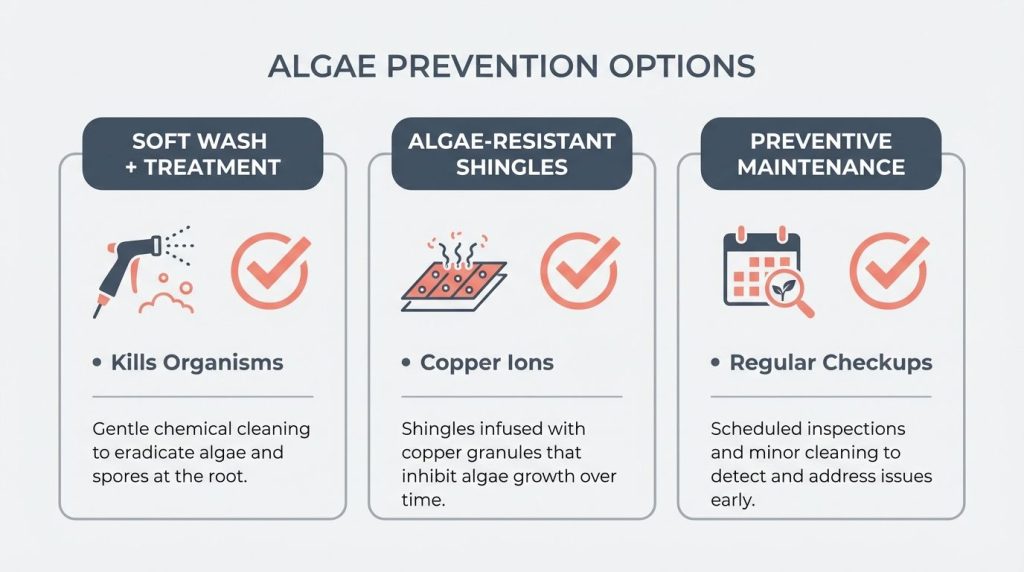
Algae prevention plan in Victoria: treatment options and what “prevention” really means (not permanent)
When homeowners ask me about algae prevention, I try to reset expectations gently: prevention means you slow it down and make it easier to remove next time.
If you’re choosing between options, here’s a simple way to think about it:
| Option | Best for | What it does |
|---|---|---|
| Soft wash + treatment | Existing roofs with visible staining or growth | Kills organisms now and reduces regrowth for a period of time |
| Algae-resistant shingles (on re-roof) | If you’re replacing the roof anyway | Many brands use algae-inhibiting granules that release copper ions over time |
| Preventive maintenance plan | Homes under trees or in heavy shade | Regular checkups keep minor moss from becoming thick moss |
A 2017 trade overview of manufacturer guidance notes that some shingle brands use algae-inhibiting granules (often copper-based) to help reduce staining over time. It won’t stop everything in Victoria’s damp seasons, but it can make roofs look cleaner longer.
For costs, many Victoria-area roof cleaning quotes are still commonly built around a per-square-foot rate. If you want a fast way to compare bids, ask each company to provide both: the total price and the approximate square-foot rate they used to calculate it.
Zinc/copper strips: where they go, what they help with, when they make sense
Zinc and copper strips can be a smart add-on after you clean, especially on shaded slopes where moss returns quickly.
They work because rainwater carries tiny amounts of metal down the roof, creating an environment that’s harder for moss and algae to establish.
- Where they go: near the ridge, ideally tucked under ridge caps or upper courses so you do not leave exposed fasteners.
- What they help with: slowing regrowth under the runoff path, especially near the top of the roof plane.
- What they do not do: they don’t remove existing moss, and they can’t protect areas that don’t get consistent runoff.
- Coverage limits: multiple roofing and maintenance sources note the effect is strongest for a limited distance downslope. On long roof runs, you may need more than one strip line to protect the full slope.
If you have a metal roof or mixed metals, ask your roofer about compatibility. Copper runoff can stain some materials, and you want to avoid creating new problems while trying to prevent moss growth.
GoNano roof treatment option: what it’s positioned to do (surface protection / water-beading) + where it fits after cleaning
Once the roof is clean and dry, some homeowners ask about a final surface treatment to help water bead and reduce staining.
That’s where a product line like GoNano gets positioned: as a topcoat step after roof cleaning, not as a replacement for moss removal techniques.
- Where it fits: after manual removal, soft wash, and any needed roof repairs.
- What to ask: which roof surfaces it’s approved for (asphalt shingles, concrete, wood), and what prep is required for adhesion.
- What it won’t do: it won’t fix leaks, failed flashing, or structural issues.
Some Canadian GoNano partners advertise warranties up to 15 years for roof protection coatings, depending on the system and installer terms.
If you’re also curious about eco-focused building protection, Vipeq’s Thermal CorkShield is another Canadian option homeowners ask about for exterior surfaces.
Maintenance schedule for Victoria: retreatment cadence + gutter/roof check frequency
In Victoria, maintenance beats big cleanups. The earlier you catch moss, the less likely you are to damage the roof surface while removing it. Engaging roof moss cleaning services in Victoria can help ensure your home’s roof remains in top condition. Regular maintenance not only enhances curb appeal but also prolongs the lifespan of your roofing materials. By addressing moss growth promptly, you can protect your investment and avoid costly repairs down the line.
Several Greater Victoria providers advertise moss-free guarantees in the 12 to 24 month range after a full service, which lines up with what I see in real-world roof maintenance here.
| Task | Typical timing in Victoria | Why it helps |
|---|---|---|
| Quick roof and gutter check (from the ground) | Every 3 to 6 months, especially after windstorms | Catches debris dams and early moss growth |
| Gutter cleaning | At least once a year, more if you have overhanging trees | Stops backups that keep roof edges wet |
| Full roof moss removal + treatment | About every 12 to 24 months in heavy shade, longer in sunnier sites | Resets growth and reduces future moss growth pressure |
If you want one simple habit that helps a lot: keep valleys and lower roof edges free of leaf debris. Moss grows faster when it has a damp, dirty mat to root into.
Quality checklist: roof moss removal scope, what a proper service includes (and what “cheap” often skips)
If you’re comparing quotes in Victoria, don’t just compare the price. Compare the scope.
Here’s a quick checklist you can copy into your notes:
- Method clearly stated: dry debris clearing, gentle hand removal, soft wash, then treatment (not pressure washing).
- Roof inspection notes: photos of valleys, flashing, skylights, vents, and any lifted shingles.
- Runoff plan: how they protect plants and control downspouts.
- Cleanup included: gutters, valleys, downspouts, and ground cleanup.
- Warranty terms in writing: what is covered (moss vs algae), and the time window (often 12 to 24 months).
- Safety and insurance: ask about training and coverage, especially for steep roofs and multi-storey homes.
Cheap jobs often skip one of the steps that actually controls regrowth, usually the full treatment, or the valley and gutter cleanup. That’s why moss grows back fast and the time to remove moss gets longer each cycle.
For homes with solar panels, moss and debris can affect panel performance due to trapped debris and shade bands. Heavy biological buildup may lower energy output and lead to extra labour costs if roof work is needed under panels.
Maintain a moss-free roof through regular roof maintenance and use effective roof moss treatments.
This video shows how to clean moss from your roof: 58sConcord Carpenter YouTube • Jul 5, 2019
This video demonstrates an eco-friendly approach to roof moss removal: 30sSpencer ClaeysYouTube • Jun 18, 2024
Conclusion
If you want your roof to last, take roof moss removal seriously before moss lifts shingles and strips granules.
Start with an inspection, focus on shaded zones and valleys, and choose a shingle-safe process that avoids pressure washing.
FAQs
1. What makes moss grow on my roof?
Moss thrives in shade (shadow) and damp spots. Spores land onto the roof and cause moss to grow.
2. Do I need to remove moss from my existing roof?
Yes, you need to remove moss on an existing roof if it lifts the roof covering or traps water. Moss must be removed before it causes rot.
3. What are the types of moss, and which is the best roof moss to remove first?
There are several types of moss and some stick harder than others. The best roof moss to remove is the one that spreads near vents and gutters. Remove moss first to stop more damage.
4. How do I protect my roof covering and stop algae and moss?
Use an effective moss control product and clean gutters often. Install a metal strip at the roof edge to reduce regrowth.
Disclosure: This content is informational and is based on over ten years of roof care experience and local guidelines. No affiliate relationships or sponsorships affect this content.