

⚠️ PRO TIP: Read This Before You Sign A Quote
The “Invisible Wetness” Factor
Here is the single most critical piece of advice I can give you after ten years of renovating homes in Greater Victoria: You cannot seal a sponge.
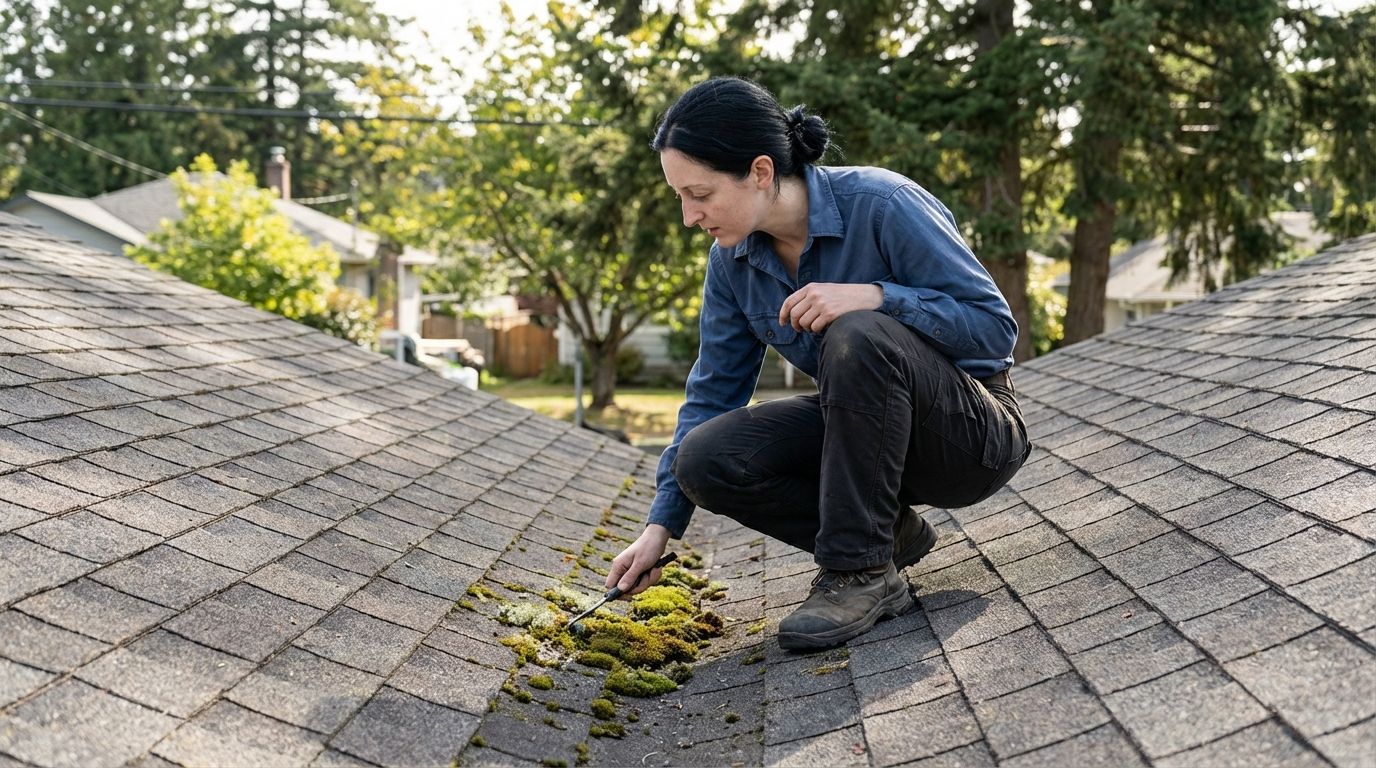
The biggest failure point for GoNano (or any hydrophobic coating) in our region isn’t the product itself—it’s the application timing. A roof might look dry to the naked eye on a sunny Tuesday, but if it rained on Sunday, the asphalt shingles are likely still holding moisture deep in the granule texture and keyways.
If a contractor sprays a sealer over trapped moisture, the product cannot penetrate the asphalt to form a bond. Penetration and performance drop significantly if the roof is still wet; we follow the TDS drying and rain-window rules.
The Rule: We do not apply “spray and pray” tactics. We require a verified “drying window”—often checking the shade patterns on north-facing slopes—before a single drop of product touches your roof. If a company quotes you a “same-day clean and seal” in November? Run. See our guide on the best time of year to remove moss to understand why timing is everything.
📌 Key Takeaways
- Dryness is Non-Negotiable: GoNano fails if applied to damp shingles. We use a “Rainforest Protocol” to verify the roof is bone-dry before application.
- Sweet Spot: Best ROI is on roofs 8–15 years old with intact granules. It is preservation, not a fix for rot.
- Cost vs. Value: Expect to pay $0.80–$1.80+/sq. ft., which makes it a highly accessible alternative to early roof replacement.
- The Science: It makes shingles hydrophobic (water-repellent), starving moss of the moisture it needs to grow.
- The Hard No: We will not treat roofs with active leaks, spongy decking, or extreme granule loss.
Quick Answer: What GoNano Is (And Who It’s Actually For)
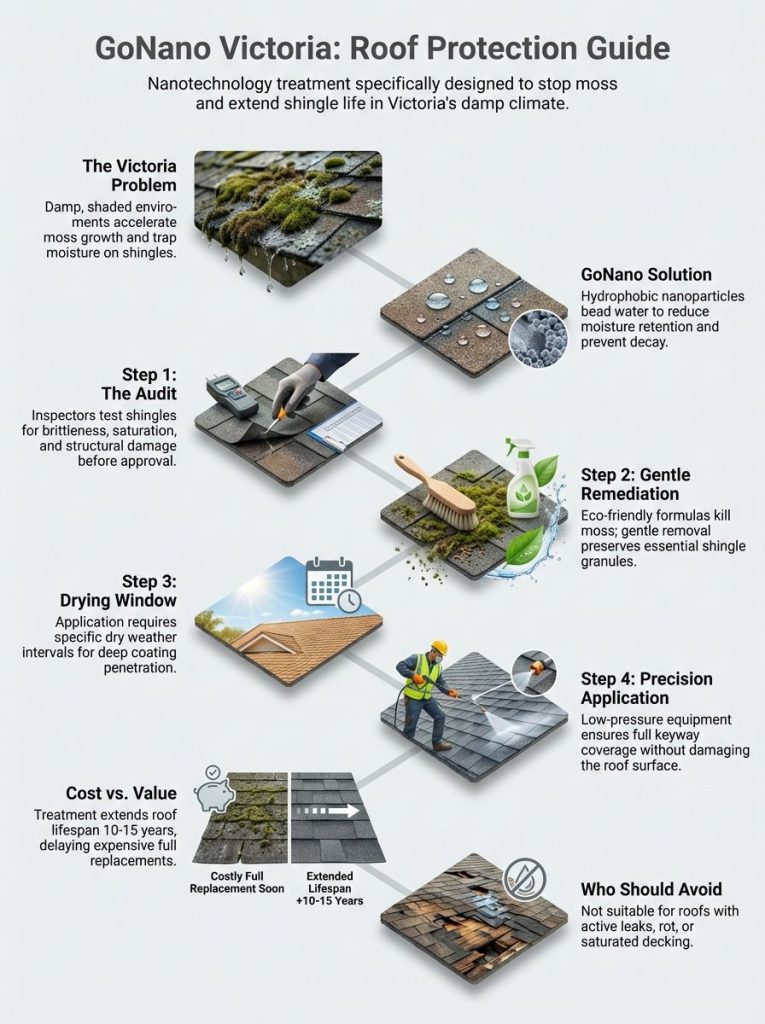
GoNano is a nanotechnology-based surface treatment designed specifically for asphalt shingles. Unlike a thick paint or acrylic sealer that sits on top of the roof (which can peel), GoNano uses nanoparticles to penetrate into the shingle.
Its primary function is to modify the surface tension of the asphalt. In plain English: it makes your roof hydrophobic. Water beads up and rolls off instead of soaking in.
The “Is It For Me?” Checklist
I treat this product as a “preservation” tool. It works best on roofs that are structurally sound but are getting tired from our constant wet/dry cycles.
- The “Shingle Saver” Zone (0–7 Years): Newer roofs can use the “Shingle Saver” tier product as preventative maintenance to stop the aging clock early (GoNano Residential).
- The “Revive” Zone (7–15 Years): Mid-life roofs are the most common candidates. The shingles must have granules, flexible tabs, and zero active leaks. You want to buy another 5–10 years before a $20,000 replacement.
- Hard No: Roofs where shingles crack when bent, “bald” shingles with no granules, or roofs with spongy decking.
Get a 2-minute “Is my roof eligible?” check
The Victoria Problem: Why Our Roofs Fail Faster
You aren’t imagining it—roofs in Victoria die younger than roofs in drier climates. Environment and Climate Change Canada data (Victoria Int’l Airport, 1991–2020) shows we get pummeled with roughly 901 mm of precipitation annually (Wikipedia Climate Data).
But the volume of rain isn’t the real killer; it’s the duration of dampness.
The Moss Microclimate
In Oak Bay, Saanich, and Metchosin, we have massive mature tree canopies. These trees block the wind and sun, creating sections of your roof that never fully dry out from October to March.
This constant dampness invites three specific enemies:
- Moss: The green, puffy clumps. These are mechanical destroyers. As they grow, their root systems (rhizoids) dig into the oxidized asphalt. Read more on how moss damages shingles by physically lifting tabs and breaking seals.
- Lichen: The crusty, flat spots (often white or mint green). These form a biological bond with the ceramic granules. If you scrape them off dry, you take the granules with them, stripping your roof’s UV protection.
- Gloeocapsa Magma (Black Streaks): This is a cyanobacteria that feeds on the limestone filler in your shingles (ARMA Algae Info). While often cosmetic, it signals that your roof is holding water.
The GoNano Logic: By making the shingle hydrophobic, we remove the water source these organisms need to establish a foothold. If the water beads and leaves, the moss can’t drink.
The Rainforest Protocol: Our Victoria-Specific Process
Because of our unique climate, Lipco Ltd uses a strict operating procedure I call the “Rainforest Protocol.” This is not a standard “power wash it and go” approach. It is designed to ensure the roof can actually accept the treatment.
Step 1: The Integrity Audit (Go/No-Go Testing)
Before we discuss price, we test the physical state of the roof.
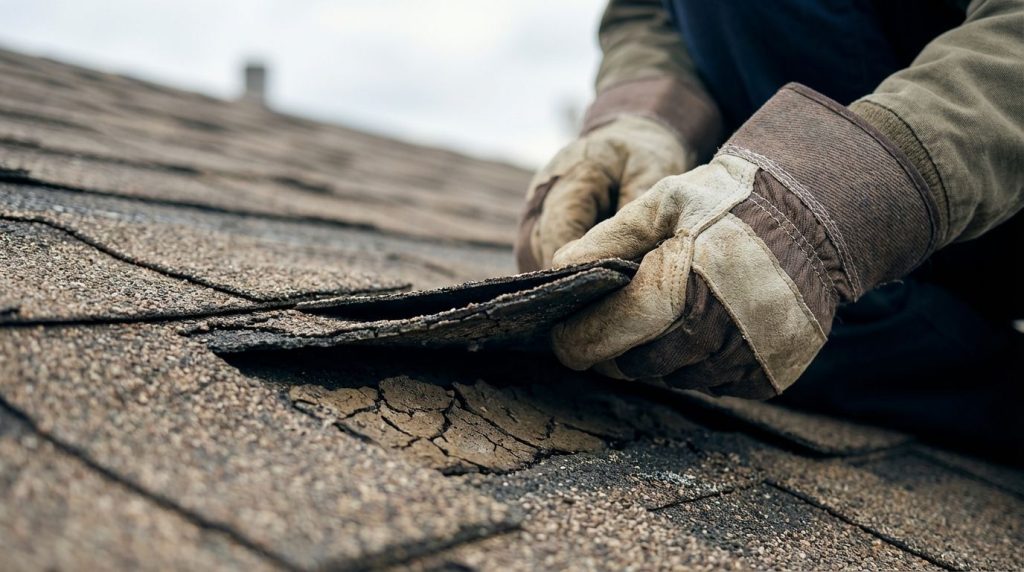
- Brittleness Test: We gently lift a tab. If it flexes, we proceed. If it cracks or crumbles, the asphalt has oxidized too much for the treatment to be effective.
- Decking Check: We walk the roof to feel for “soft spots”—indications that the plywood sheathing underneath is rotting.
- Granule Loss: We check your gutters. If they are filled with inches of sand, your shingles may be too far gone to clean safely.
Step 2: The Kill & Gentle Removal
Warning: High-pressure washing is likely to damage asphalt roofing. It strips the ceramic granules off the fiberglass mat. Once those granules are gone, UV rays destroy the asphalt much faster (ARMA Warning). Learn about the crucial difference between soft wash vs. pressure washing.
- The Kill: We apply a specialized treatment to terminate the moss and lichen down to the root. For DIYers, we review the best moss killer for roofs, but professional application ensures even coverage.
- The Wait: We let the solution work. Scrubbing live moss is difficult and damaging. Scrubbing dead moss is easy and gentle.
- The Rinse: We use high-volume, low-pressure water (similar to a garden hose) to guide the debris off the roof.
Step 3: Runoff Control (Local Regulation)
The City of Victoria’s stormwater bylaw is clear: only clean water belongs in storm drains (Victoria Stormwater Management). We plan containment to ensure that moss debris and cleaning runoff do not enter the municipal catch basins. We also protect your landscaping and concrete driveways from runoff.
Step 4: The Critical Drying Window
This is where we differ from the “fast” guys. We track the weather. We need the internal humidity of the shingle to drop. This might mean we clean on a Friday and return on a Monday or Tuesday to apply the GoNano. We do not rush this.
See our full guide on how to remove moss from roofs properly
How GoNano is Different: Hydrophobic Protection vs. Cleaning
Cleaning removes the symptom (moss). GoNano addresses the cause (porosity and moisture). There is a distinct difference between standard moss removal vs. roof cleaning with preservation in mind.
When asphalt oxidizes over time, it becomes more porous. It absorbs water like a sponge. This leads to:
- Freeze/Thaw Damage: Water soaks in, freezes at night, expands, and micro-cracks the shingle.
- Heavy Weight: A waterlogged roof is heavier, putting stress on the structure.
- Growth: Wet asphalt is a petri dish for algae.
The Nanotech Solution
GoNano particles are incredibly small (nano-scale). When sprayed, they navigate through the existing gaps in the asphalt and wrap around the individual granules and bitumen molecules.
Typically 4–6 hours dry time; repellency continues developing over several days. (Shingle Saver TDS). The result is a surface where water forms tight beads and rolls off, taking dirt and spores with it. It mimics the behavior of a brand-new shingle, but potentially even more water-resistant.
See a water-bead demo on your roof
The Financial Breakdown: Cost, ROI & Replacement Comparison
Let’s look at the numbers. In Victoria, roof maintenance is an investment in cash flow protection. A full roof replacement is one of the most expensive capital expenditures a homeowner faces.
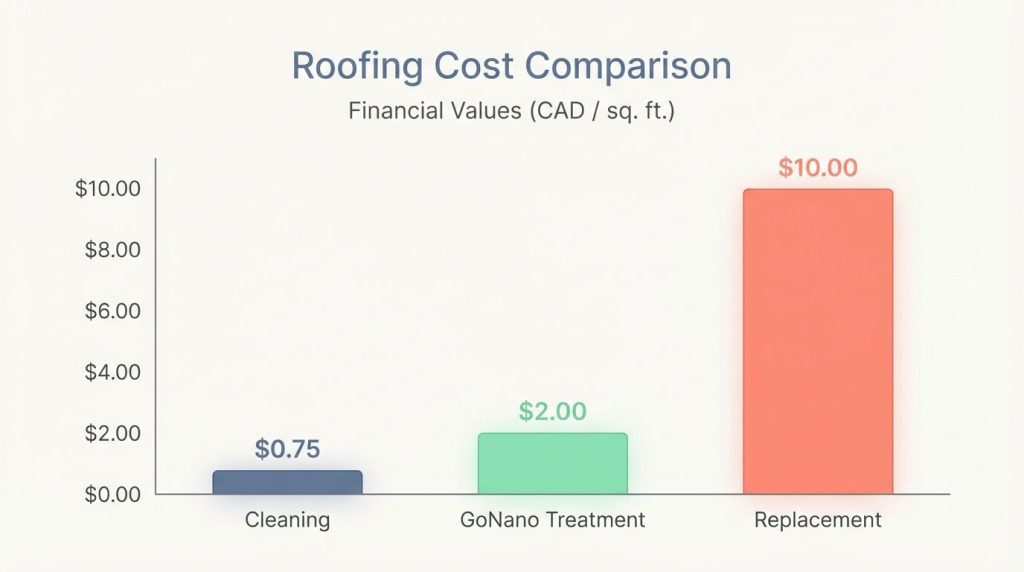
The data below merges local cleaning costs, GoNano application rates, and current Vancouver Island roofing replacement benchmarks (2025/2026).
Comparative Cost Table (Based on 2,000 sq. ft. Roof)
| Cost Item | Price Per Sq. Ft. (Est.) | Total Est. Cost | The “Why” Behind the Price |
|---|---|---|---|
| Basic Moss Removal | $0.20 – $0.75 | $400 – $1,500 | Covers labor, safety gear, and kill-solution. Low end is “blow & go”; high end is full gentle removal + cleanup. (Source) |
| GoNano Treatment | $0.80 – $1.80+ | $1,600 – $3,600+ | Includes the audit, the premium product, application labor, and warranty registration. |
| Roof Replacement | ~$7.50 – $10.00 | $15,000 – $20,000 | Includes tear-off, disposal fees (high in Victoria), underlayment, new vents, flashing, and installation. (Source) |
The ROI Calculation
Does spending $2,400 to save an old roof make sense?
Scenario A: The Cycle of Cleaning If you pay $800 for a cleaning every 2 years to keep moss at bay:
- Over 10 years: 5 cleanings x $800 = $4,000.
- Result: Your roof is clean, but the shingles are still aging and getting brittle. You likely still need to replace the roof at year 10.
Scenario B: The Preservation Route You pay $800 for prep + $1,600 (starting price) for GoNano (Total ~$2,400).
- The treatment aims to extend the life of the shingles by 5–15 years (depending on initial condition) by stopping the freeze/thaw cycle and granule loss.
- If this pushes your $20,000 replacement cost back by even 5 years, the “cost of money” saved is significant.
The Verdict: If your roof is in the “Goldilocks Zone” (8–15 years old, good structure), the treatment costs roughly 10-15% of a replacement. If it buys you 30-50% more life, the math works in your favor.
Ask for an ROI comparison for your roof size
Who Should NOT Buy GoNano? (The “No-Go” List)
I believe in turning down money today to keep a good reputation tomorrow. We will refuse to apply GoNano if your roof shows these signs:
- The “Crunch” Factor: If we walk on the roof and hear crunching, or if the shingles crack when we inspect the underside, the asphalt has dried out completely. No amount of nanotech can reverse that chemical breakdown. You need a new roof.
- Saturated Decking: If the plywood beneath the shingles is spongy, you have a structural rot issue. Sealing the top won’t fix the rot underneath; in fact, it might trap the moisture in.
- Active Leaks: GoNano is a surface protector, not a gap-filler. It does not seal holes, flashings, or plumbing vent leaks. Those must be mechanically repaired first.
- Bad Ventilation: If your attic is a sauna because your soffits are blocked, your shingles are cooking from the inside out. External treatment won’t solve an internal ventilation crisis.
If we see these issues during the audit, we will tell you straight up: “Save your money for a replacement.”
Next Steps: The 3 Service Levels
We keep it simple. Based on our audit, we will recommend one of three paths:
1. Clean Only
- Best for: Sellers listing their home who want curb appeal, or roofs that are too old for treatment but need a cosmetic tidy-up before replacement.
- Includes: Moss kill, gentle removal, gutter flush, ground cleanup. Check out what is included in roof moss removal.
2. Clean + Treatment
- Best for: Homeowners on a budget who want to kill the moss and stop it from returning for a few years, but aren’t ready for the full investment. Best roof moss removal sprays can often be part of this maintenance step.
- Includes: Standard cleaning + a basic biocide inhibitor.
3. Full GoNano Protection
- Best for: The “Forever Home.” You want to maximize the lifespan of your current roof, stop granule loss, and ensure your home is protected against Victoria’s wet winters for the next decade.
- Includes: The full “Rainforest Protocol” (Audit, Prep, Dry, GoNano Application).
Don’t guess at the condition of your shingles. You can’t see micro-cracks from the driveway.
Book your GoNano eligibility assessment + quote today.
Frequently Asked Questions
Q: Does GoNano change the look of my roof? A: Unlike acrylic coatings that can leave a shiny, plastic look, GoNano is clear. It penetrates the shingle. Initially, you might see a slight enrichment of the color (like wet stone), but it generally dries to a natural matte finish.
Q: Can I do this myself? A: We strongly advise against DIY roof work for two reasons:
- Safety: Falls from roofs are a leading cause of injury. WorkSafeBC regulations exist for a reason.
- Prep Quality: The success of the coating is 90% prep. Without the right low-pressure equipment and knowledge of the “drying window,” you risk sealing in moisture or stripping your granules with a rental pressure washer.
Q: How long does the treatment last? A: Most applications are designed to perform for 10–15 years, depending on the tier of product chosen (Shingle Saver vs. Revive) and the environmental exposure.
Q: Does this work on concrete driveways? A: Yes. The same technology is excellent for concrete. It prevents water from soaking into the driveway, which stops cracks caused by freezing water and prevents oil stains from setting deep into the concrete pores.
