

Pro Tip: The “Two-Day Dry” Rule
Stop checking the forecast for just the day of service.
Most homeowners make a critical mistake: they book moss removal for the first sunny Saturday after a week of rain. This damages your roof.
We aim for roughly 2 dry days before we touch it.
Key Takeaways (At A Glance)
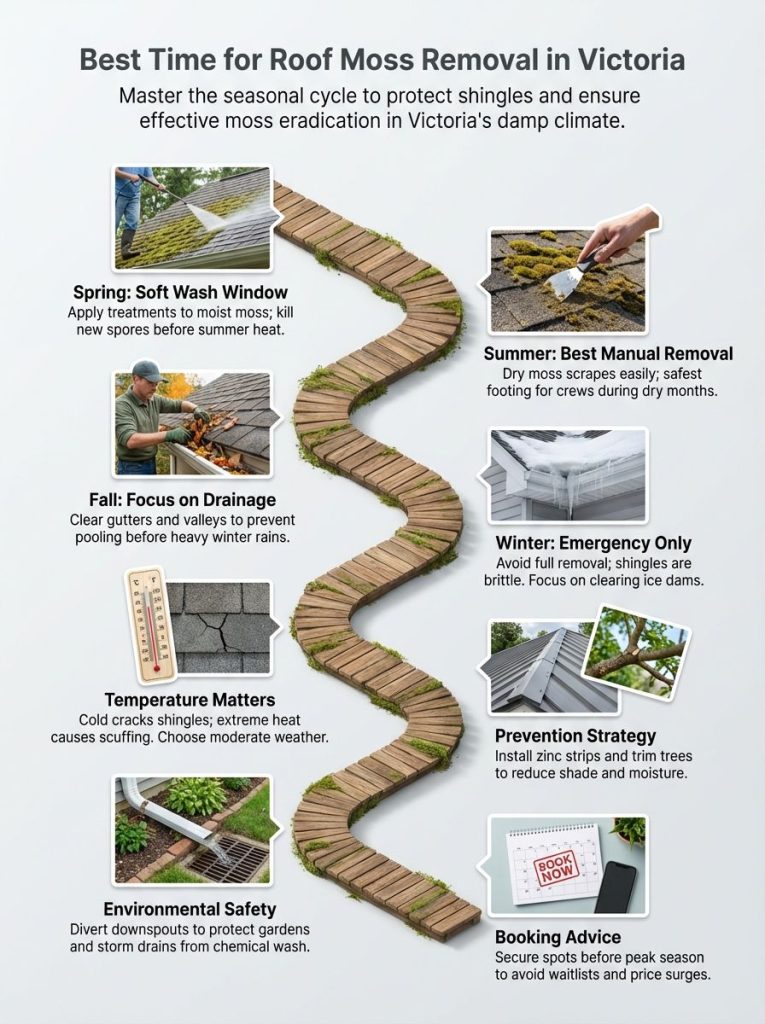
- Rule #1: Never scrape wet moss. It rips off shingle granules. Wait for 48 hours of dry weather.
- Best Time for Removal: July and August are the only safe months for manual brushing of thick moss.
- Best Time for Prevention: March to June is ideal for soft washing to kill spores before they spread.
- Winter Warning: Avoid full removal in winter (Nov–Feb). It’s dangerous for workers and causes thermal cracking in shingles.
- Fall Strategy: Focus on gutters and valleys in September/October to prevent water backups, not full removal.
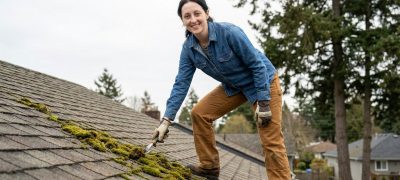
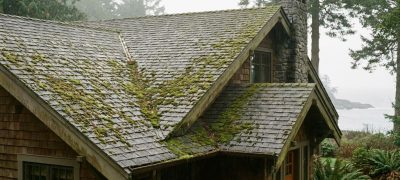
Why? When moss is fully hydrated, its root-like rhizoids swell and lock tightly around the ceramic granules of your asphalt shingles. If you scrape wet moss, you pull the granules off with it, shortening your roof’s lifespan. After two days of dry weather, moss dehydrates, shrinks, and releases its grip. It creates a “mechanical separation” that allows us to lift it off in sheets without scouring the shingle surface.
The Golden Rule: If the pavement on the north side of your house is dry, your roof is likely ready. Sunny sidewalks dry hours before shaded shingles do.
Why Timing is Engineering, Not Just Scheduling
In Victoria, we don’t just battle moss; we battle the calendar. Weather data for the region shows we see roughly 140–160 days of precipitation annually (depending on the year and dataset). That is nearly half the year where your roof is actively feeding fungal growth.
You cannot fight biology with a calendar date alone. You need to match the removal method to the moisture level of the plant.
- Dry Season (July–Aug): Best for Mechanical Removal (Brushing/Scraping). The plant is brittle and detaches easily.
- Moist Season (Mar–June): Best for Chemical Treatment (Soft Wash). The plant is active and absorbs products deeply.
- Wet Season (Nov–Feb): Emergency Only. The roof is too fragile and slippery for full service.
This guide breaks down exactly how to handle your roof in every season to maximize shingle life and minimize cost.
Mid-Summer (July–August): The Sweet Spot for Manual Removal
If your roof has thick, carpet-like moss (over 1 inch), summer is the only time to remove it safely.
During July and August, Victoria sees an average of just 4.8 rainy days per month based on Environment and Climate Change Canada data. This consistent dryness creates the perfect conditions for “low-impact” removal.
The Physics of Dry Removal
Asphalt shingles are thermoplastic. In extreme heat, they soften; in cold, they become brittle. But the mid-summer temperature range in Victoria (typically 20°C–25°C) is ideal. The shingles are pliable enough to walk on without cracking, but the moss is dry enough to crumble.
Why Pros Prefer Summer:
- Granule Preservation: Dry moss snaps off the surface. Wet moss smears and tears.
- Treatment Adhesion: Once we clear the bulk moss, we apply a residual treatment. In summer, this product dries on the shingle and creates a protective barrier. In winter, rain washes it into the gutter before it bonds.
- Safety: Roof slopes like 8/12 pitch are walkable when dry but deadly when slimed with wet algae.
Local Nuance: If you live in a high-canopy area like Broadmead or Metchosin, your roof stays damp longer. You might need to wait until late July for the north-facing slopes to fully dry out for manual removal.
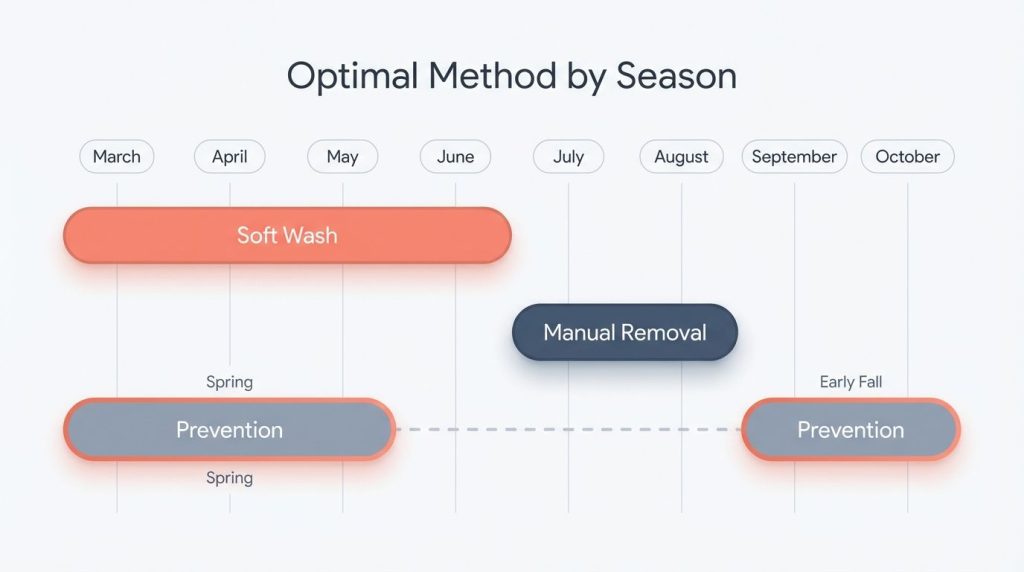
Spring (March–June): The Prevention Window
Spring is not for scraping; it is for chemistry.
Between March and June, moss wakes up. It enters its reproductive phase, spreading spores via wind and water. Because the plant is metabolically active, it absorbs treatments faster than in summer (when it goes dormant) or winter (when it is saturated).
The “Soft Wash” Advantage
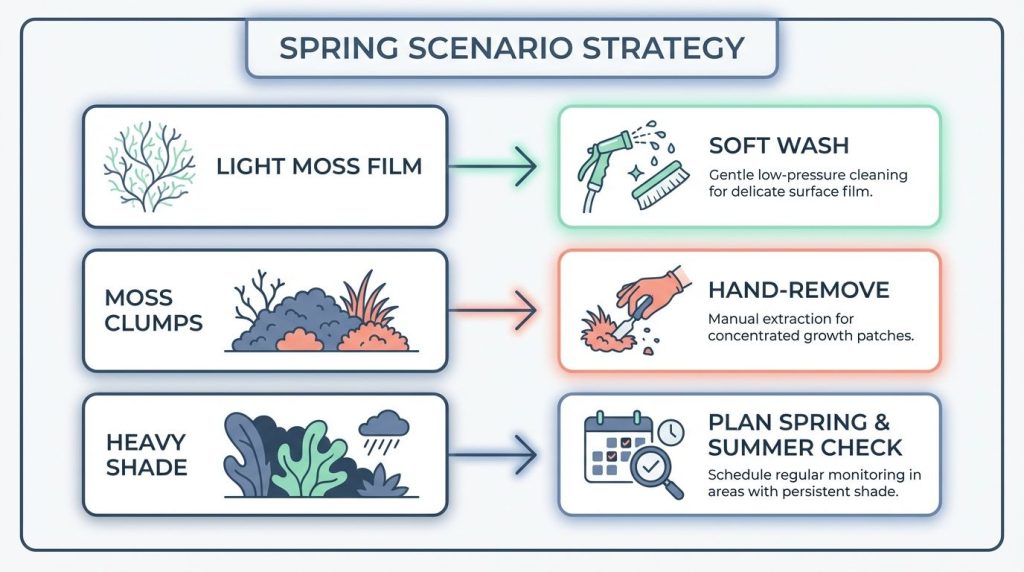
If you catch moss early—when it is just a green fuzz or small dime-sized clusters—you do not need brushes. You need a Soft Wash. This method uses low-pressure application of specialized cleaners to kill the infestation at the root.
The 4-Hour Rain Rule: Manufacturers of professional soft wash solutions (and retail options like Wet & Forget) require dwell time. You need a window of 4 to 5 hours without rain after application.
- Too soon: The rain dilutes the mix below the kill concentration.
- Too late: If you wait until high summer, the solution evaporates before it penetrates the root system.
Health & Safety Check: Before any contractor sprays your property, ask for the product’s PCP (Pest Control Product) Registration Number. Health Canada regulates surface biocide. If they cannot provide a label or a number, they might be using unapproved mixtures like high-strength bleach (sodium hypochlorite) without proper surfactants and buffers. Buffers stabilize the pH to protect metal gutters, while surfactants keep the solution from running off before it works. For DIYers, check our guide on the best moss killer for roofs.
Fall (September–October): Drainage & Defense
Fall is the “Goalie” season. You aren’t trying to score points; you are trying to stop the puck.
Once the September rains hit, the moss you ignored all summer swells up like a sponge. A patch of dry moss can hold many times its own weight in water. This constant weight and moisture keep the shingle backing wet, leading to rot.
Your Fall Priority List:
- Clear the Valleys: Roof valleys are your primary drainage lines. If moss dams a valley, water diverts sideways under the shingles. This is the #1 cause of leaks we see in November.
- Flush the Gutters: It is not just about leaves. Moss sheds sediment that creates a heavy sludge in the gutter trough. This sludge weighs down gutters, pulling them away from the fascia board.
- Apply Zinc/Copper: If you install zinc strips, ensure they are placed directly under the ridge cap. The coming rain will oxidize the metal, washing moss-inhibiting ions down the roof slope just in time for the growing season.
Economic Note: Fall services often cost less than emergency winter call-outs. Booking a simple roof cleaning or “Blow & Go” (debris removal) in October is significantly cheaper than a leak repair in December.
Winter (November–February): The Danger Zone
Let’s be direct: Do not pay for full moss removal in winter.
It is a waste of money and a liability risk.
Why Winter Removal Fails
- The Smear Effect: You cannot brush wet moss. It turns into a slimy paste that fills the gaps between shingles, locking moisture in rather than removing it.
- Shingle Fractures: Asphalt shingles harden in temperatures below 5°C. Walking on a freezing roof to scrub it will cause “thermal cracking” and granule loss.
- Safety Regulation: WorkSafeBC regulations regarding fall protection are strict. A wet, moss-covered roof is practically a slip-and-slide. The setup time for ropes and harnesses triples the labor cost. Furthermore, if you hire a worker who skips these safety protocols to save time, you risk significant liability for injuries on your property.
The Only Exception: Emergency Triage Contact us in winter only if:
- A moss dam is causing water to back up into the house.
- A downspout is fully blocked and overflowing against the foundation.
- A large branch has fallen on the roof.
We will not clean the whole roof. We will perform a surgical strike to clear the obstruction and get off the roof immediately.
The Decision Matrix: Price, Risk, and Result
We consolidated 2025 local pricing data and risk factors into this single reference table. Note that costs vary by roof steepness (pitch) and access.
| Season | Best Strategy | Est. Cost (Per Sq. Ft)* | Risk to Shingles | Primary Benefit |
|---|---|---|---|---|
| Summer | Manual Removal + Treatment | $0.40 – $0.80 | Low (if dried properly) | Instant visual improvement; Longest lasting result. |
| Spring | Soft Wash (Prevention) | $0.20 – $0.50 | Very Low | Kills spores; Lowest cost; No foot traffic damage. |
| Fall | Debris & Gutter Clearing | Flat Rate ($200–$400) | Moderate | Prevents winter leaks; Protects foundation drainage. |
| Winter | Emergency Triage | Hourly ($150+) | High | Stops immediate water damage only. |
*Pricing estimates based on standard walkable roofs. Steep pitch (safety harness required) increases costs. Get a custom quote for accuracy.
Local Factors: Know Your Zone
Victoria is not uniform. Your location dictates your schedule.
Zone A: The Coast (Gonzales, Fairfield, Oak Bay) You get more wind and sun. Your moss dries out faster. You can often schedule manual removal as late as September or as early as May.
Zone B: The Canopy (Broadmead, Highlands, Saanich) You have heavy fir and cedar cover. Your roof sees less direct UV. You have a shorter window for manual removal (July/August only). You absolutely need a preventative treatment in Spring, or the moss will regrow within 6 months.
Zone C: The Westshore (Langford, Colwood) Newer developments often have tighter spacing between houses, creating wind tunnels or permanent shade pockets. Check the North side of your roof; in these tight corridors, it often needs treatment every 2-3 years, while the South side may stay clear for 5+.
Summary: Your 12-Month Battle Plan
Don’t overcomplicate it. Follow this cycle to keep your warranty valid and your roof dry.
- March: Walk the perimeter. See green fuzz? Book a Soft Wash.
- July: See thick moss? Book Manual Removal (Wait for the 2-day dry spell).
- October: See pine needles? Clean the gutters to prevent dams.
- December: Stay off the roof. Drink cocoa.
If you follow this timeline, you stop reacting to leaks and start managing an asset. Curious about exactly what we do during these visits? Check what’s included in our moss removal service.
Frequently Asked Questions (FAQ)
When is the absolute best time to remove moss in Victoria?
For removing thick, established moss, mid-summer (July–August) is best because the moss is dry and brittle. For killing early growth and preventing spread, Spring (March–June) is best for applying treatments.
Can I remove moss in the winter?
We strongly advise against it. Winter moss is wet and clings to the shingles, making removal damaging to the roof. The roof is also slippery, increasing safety risks. Winter visits should be limited to emergency gutter or drainage clearing.
Does moss actually damage my roof?
Yes. Moss works roots under the shingles, lifting them up and allowing water to seep underneath. It also traps moisture against the asphalt, which accelerates granule loss and rot. Left unchecked, it can cut years off your roof’s lifespan.
How much does professional moss removal cost in Victoria?
In 2025, rates typically range from $0.40 to $0.80 per square foot for manual removal and treatment. Preventative soft washing is cheaper, often $0.20 to $0.50 per square foot. Costs increase for steep roofs or difficult access.
Disclaimer: This guide refers to standard asphalt shingle roofs common in Victoria, BC. Clay tile, cedar shake, and metal roofs have different friction coefficients and cleaning requirements. Always consult a professional for your specific material.