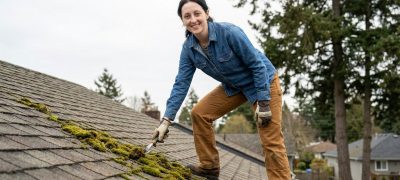

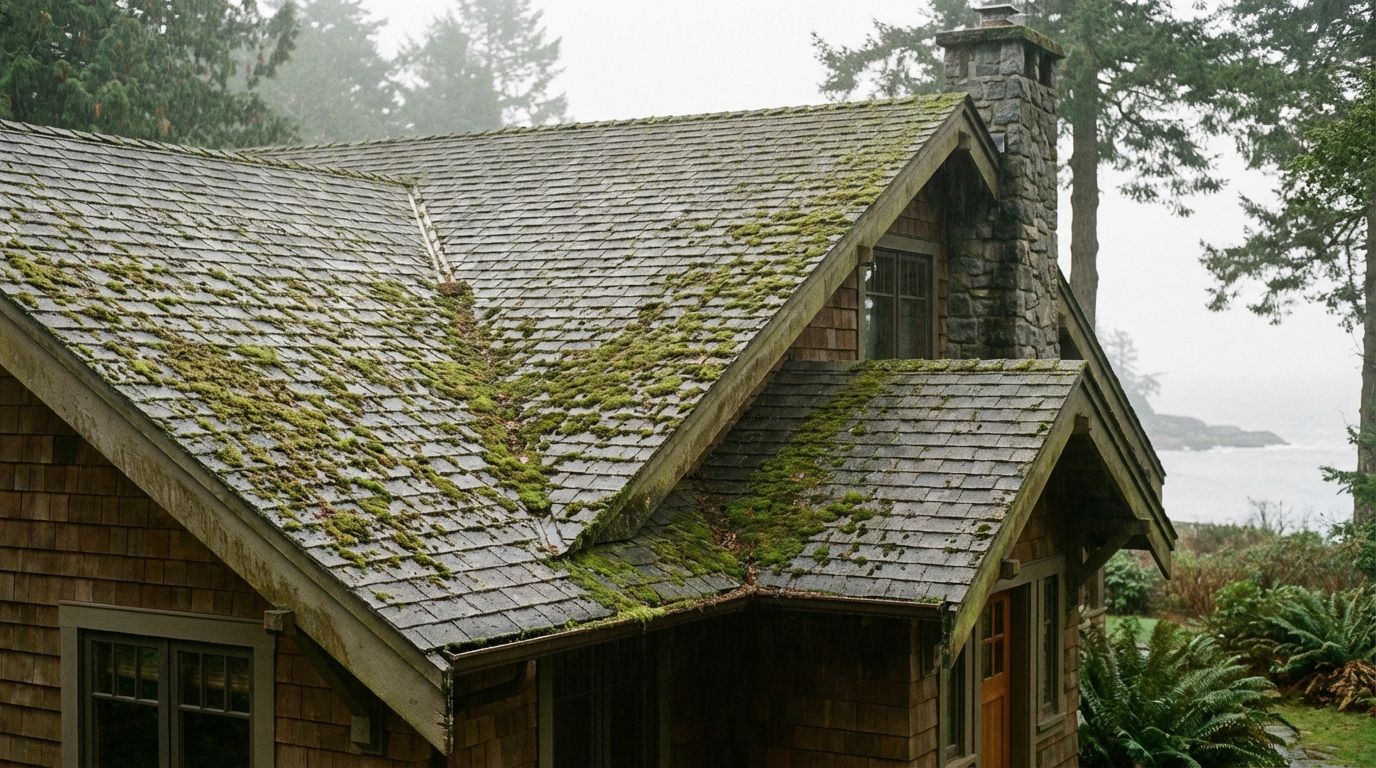
Ever looked up at your roof and thought, “Why is that moss back already, and what moss killer actually works in Victoria?”
You’re not imagining it, our mix of damp, shade, and coastal air makes moss on roof a repeat visitor.
I’m Victoria. I write about roof care for Roof Moss Removal Victoria and work with Lipco Ltd, a family-owned renovation company in Greater Victoria, and I’ll keep this practical, roof-safe, and easy to follow.
A good moss killer is not just about turning green moss brown. It’s about slowing regrowth without wrecking shingles, gutters, plants, or storm drains.
Environment and Climate Change Canada’s 1991 to 2020 normals show the Victoria area gets measurable precipitation on roughly 158 days per year, which is why moisture control matters as much as moss removal.
Why does roof moss keep coming back in Victoria, BC, and what should a “moss killer” actually do?
In Victoria, moss grows because the roof stays damp for long stretches, especially on north-facing slopes and under trees. That moisture sits longer in valleys, around skylights, and anywhere debris builds up like a sponge.
If you only rinse off the “green carpet,” you usually leave behind spores and tiny root-like structures that cling to shingle grit. That’s why many homeowners see moss return within a few seasons, even after a “clean-looking” job.
A roof-safe moss killer should do three things: kill active growth, hit the invisible leftovers, and help prevent moss from getting established again.
- Remove the moisture traps: needles, leaves, and dead moss around roof lines and in gutters.
- Kill what you can’t see: spores in cracks and crevices, and growth tucked under shingle edges.
- Slow the comeback: a compatible inhibitor or prevention layer that fits your roof material.
If you want fewer repeat cleanings, treat roof moss as a system: cleanup, chemical treatment, then prevention.
What makes a roof moss killer “best” (kill speed, regrowth control, shingle safety, runoff risk)?
“Best” depends on your roof, your landscaping, and how close your downspouts are to drains. In my experience, the best roof moss remover is the one that gets results without stripping granules or creating runoff headaches.
If you own rentals or manage properties, it helps to budget moss removal like other maintenance items, the same way you might track expenses for SDA investments.
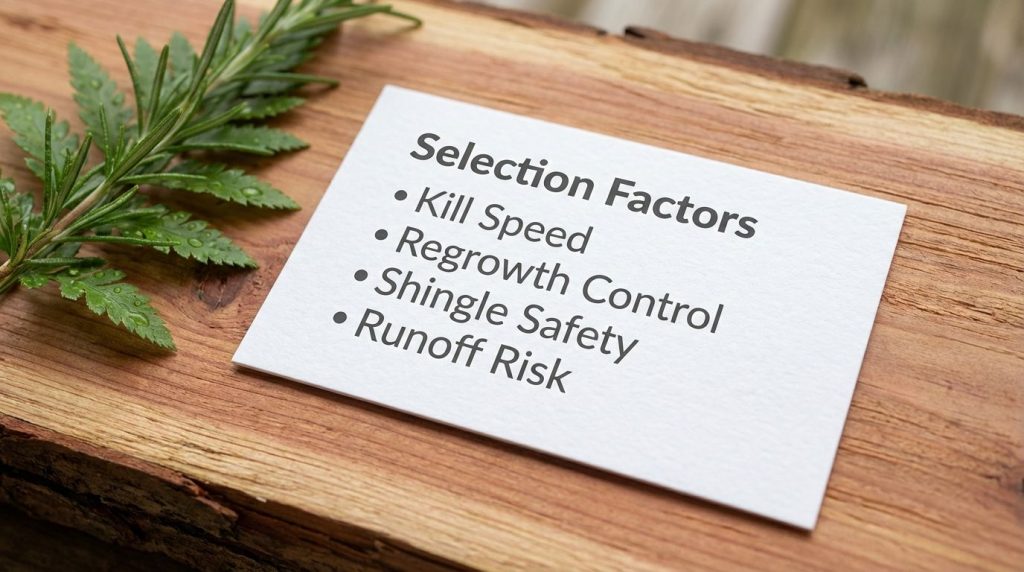
| What you care about | What to look for | Why it matters in Victoria |
|---|---|---|
| Kill speed | Fast-acting chemicals vs slow “spray and leave” | Fast kills look great quickly, but they can raise shingle and runoff risk. |
| Regrowth control | Follow-up inhibitor, strip prevention, or coating | Shade and wet seasons mean spores can re-seed fast. |
| Shingle safety | Low-pressure rinse, no aggressive brushing | Asphalt shingles rely on surface granules for UV protection and durability. |
| Runoff risk | Downspout control, plant protection, drain awareness | What runs off your roof often ends up at storm drains, gardens, patios, and pavers. |
A simple rule I share often: if a company promises instant results, ask what they’re trading off. Speed usually means stronger chemistry, more rinse water, or both.
Before you apply anything: how do you check roof type, shingle age, and whether cleaning will strip granules?
Before you spray any moss killer, confirm your roof material and its condition. An older, brittle shingle can shed granules from pressure washing, heavy scrubbing, or harsh chemical contact.
Start from the ground when you can. Binoculars let you spot curled shingle edges, thin spots, and bare patches without climbing onto a wet roof.
- Identify roof material: asphalt shingles, cedar, tile, or metal roofs all need different approaches.
- Check “touchy zones”: valleys, around flashings, and near the roof ridge where debris builds.
- Look for granule loss: shiny bald areas, uneven colour, and exposed mat are red flags.
- Plan runoff control: where will your rinse water go, lawn, driveway, patio, or storm drain?
WorkSafeBC rules require fall protection when there’s a risk of a 3 m fall, and they add stricter requirements on steep roofs (including roofs at or steeper than an 8 vertical to 12 horizontal slope ratio).
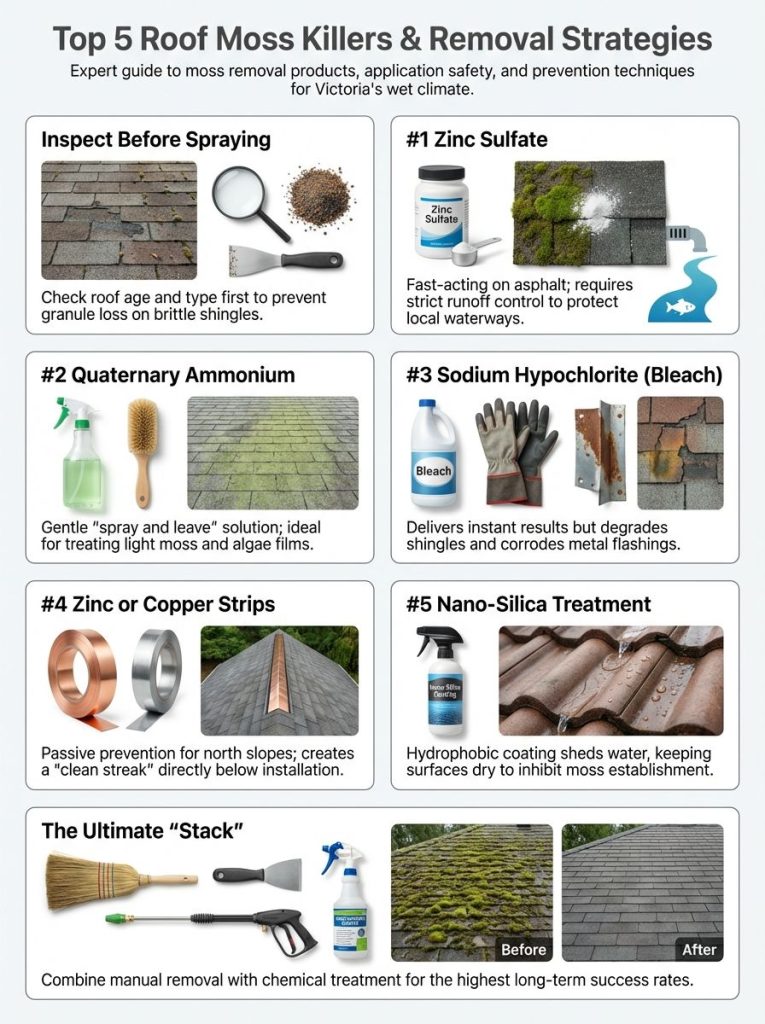
#1 Zinc sulfate moss killer (fast kill), when it works, and when it’s a bad idea near drains/streams
Zinc sulfate can kill roof moss quickly, especially in shaded zones where moss grows aggressively. It’s often chosen for tough patches because it works even when the moss is thick and actively growing.
The downside is runoff risk. Zinc is a metal, so you need to think past the roof and out to your gutters, soil, and nearby storm drainage.
If your downspouts discharge near a storm drain or stream, treat runoff control as part of the job, not an afterthought.
Environment and Climate Change Canada notes that dissolved zinc can harm aquatic life at elevated concentrations, which is why runoff control matters with zinc-based chemical substance products.
- Best for: heavy moss on asphalt shingles where you can control runoff.
- Avoid if: you cannot keep rinse water out of sensitive landscaping or storm drains.
- Pair with: thorough debris removal, gutter cleanup, and a prevention plan.
If you’re comparing quotes in Greater Victoria, ask for the exact plan for gutters and ground cleanup. This is one of the biggest differences between a “quick spray” and a roof-safe moss removal.
How to use zinc sulfate safely on asphalt shingles (light application, no scrubbing, debris control)
If you use zinc sulfate, keep the method gentle. The goal is to kill moss, not grind it into the shingle surface.
- Dry cleanup first: lift off loose moss with a plastic scraper or soft broom, then bag it.
- Clear water paths: clean gutters and downspouts so you can manage where water goes.
- Apply lightly: use a sprayer for even coverage, and avoid soaking edges and laps.
- No scrubbing shingles: a scrub brush can dislodge granules and shorten shingle life.
- Control runoff: redirect downspouts temporarily, and protect plants with pre-wet and rinse steps.
If the roof is steep, wet, or more than one storey, hiring an insured crew is often the safest choice.
#2 Quaternary ammonium “spray and leave” treatments (slow kill), best for light moss + algae films
Quaternary ammonium “spray and leave” treatments are popular because they’re gentle on shingles when applied correctly. They work well on light moss on roof and thin algae films.
This is where expectations matter. These products often kill slowly, so you might not see a dramatic change right away.
- Best for: early-stage moss growth, algae staining, and maintenance visits.
- Not ideal for: thick moss mats that are holding moisture against the shingles.
- Pro move: combine with manual removal so the chemical can reach what’s left behind.
If a quote sounds like “spray only,” ask what they’ll do about debris in valleys and gutters. Debris management is a big part of preventing regrowth.
What timeline to expect (weeks/months), and how to avoid disappointment with “slow fade” products
With many “spray and leave” products, the moss fades over weeks or months, not hours. That’s normal.
The easiest way to avoid disappointment is to agree on what “done” looks like: less slippery growth, less lift at shingle edges, and cleaner water flow, not an instantly spotless roof.
| What you might see | What it usually means | What to do |
|---|---|---|
| Moss turns dull but stays stuck | It’s dying, but still needs time or light cleanup | Schedule a gentle follow-up sweep, no pressure washing. |
| Clean areas, but moss returns in valleys | Debris and shade are still feeding regrowth | Improve gutter cleaning and trim overhanging branches. |
| Streaky results | Uneven application or water channelling | Ask for a more even spray pattern and better runoff control. |
#3 Bleach/sodium hypochlorite (instant-looking results), why it can shorten shingle life and damage metals/plants
Sodium hypochlorite (bleach) can create instant-looking results because it lightens organic staining fast. It can also be harsh on plants, irritating to skin and eyes, and risky around some metals.
On asphalt shingles, the bigger issue is how bleach cleaning is often paired with aggressive rinsing or brushing to “finish the look.” That combination can speed up granule loss and shorten shingle life.
GAF warns against using a pressure washer on shingles because it can cause granule loss and lift shingles.
If a company uses bleach, you want a clear plan for dilution, protection of landscaping, and how they will keep runoff from pooling in gutters.
If a company uses bleach, what questions should you ask about dilution, rinsing, and protecting gutters/landscaping?
You don’t need to be a chemist, you just need specific answers instead of vague promises.
- What dilution ratio will you use? Ask for the number, not “light mix.”
- How will you rinse? Confirm low pressure rinsing and no aggressive scrubbing.
- How will you protect plants? Ask about pre-wetting, covering, and post-rinsing lawns and garden beds.
- What’s the gutter plan? Will they flush gutters and downspouts so chemicals do not sit in the system?
- Where does runoff go? Get a clear plan for patios, pavers, driveways, and storm drains.
Also ask for photos of the roof line and gutters after cleanup. That’s often where problems show up first.
#4 Zinc or copper strips (passive prevention), what they prevent, the “clean streak” effect, and install risks
Zinc and copper strips work by releasing small amounts of metal into rainwater runoff. That runoff creates a “clean streak” below the strip where moss and algae have a harder time taking hold.
In practice, strips work best as prevention after you remove moss from a roof. They are not a magic fix for an already thick, rooted moss problem.
- Best for: slowing regrowth on north-facing roof areas and near the roof ridge.
- Watch outs: uneven water flow, debris that blocks runoff, and installation risks on steep roofs.
- Installation note: strips usually need to sit under ridge caps to work properly.
One Canadian roof maintenance company notes that zinc strips often influence roughly 10 to 15 feet below the ridge, so larger roofs may need more than one run of strip to protect lower sections.
Zinc vs copper: how long they last, what they cost, and where they actually help on a Victoria roofline
Choosing zinc vs copper comes down to coverage, compatibility with nearby metals, and how long you want the prevention to run before you revisit it.
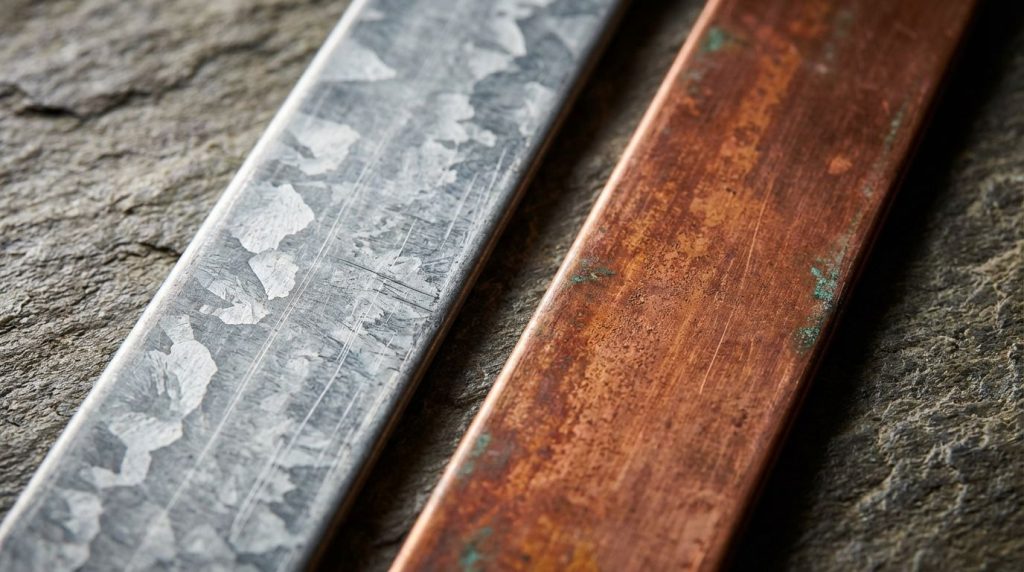
| Option | Where it helps most | Common limitation |
|---|---|---|
| Zinc strip | Under ridge caps, above persistent moss zones | Coverage can be streaky if water channels around debris. |
| Copper strip | Similar ridge placement, often chosen for stronger inhibition | May not suit every roof detail, especially where metal compatibility is a concern. |
Even with strips, you still need gutter cleaning and debris removal. If the roof stays shaded and wet, moss can still find a way.
#5 GoNano-style nano-silica roof treatment (surface behavior change), how hydrophobicity helps reduce moss setup
Nano-silica style treatments focus on changing how your roof surface handles water. The goal is hydrophobicity, water beads up and sheds faster, so the shingle stays drier and less inviting to moss and algae.
This type of approach can be a good fit if you’re trying to prevent moss, not just kill it repeatedly.
- Best for: homeowners who want longer gaps between cleanings.
- Works with: good debris control, gutter maintenance, and trimming shade where possible.
- Still required: you must remove existing thick moss first, coatings are not meant to glue moss in place.
If you like “eco-friendlier” exterior protection, products like Vipeq Thermal CorkShield are marketed as mould and mildew resistant and breathable. It’s more of an exterior finish option than a roof moss killer, but it’s worth asking about for walls and other exterior surfaces that stay damp.
Which GoNano tier fits your roof age (newer vs mid-life), and what the warranty typically does/doesn’t promise
With tiered nano treatments, the “right” choice usually depends on roof age and condition.
| Roof condition | Typical fit | What warranties often exclude |
|---|---|---|
| Newer roof | Protection focused on keeping water out and slowing aging | Debris buildup, clogged gutters, and heavy shade issues |
| Mid-life roof | Rejuvenation style products that focus on performance and water shedding | Existing damage, poor ventilation, and areas with ongoing granule loss |
Ask for the written maintenance requirements. If they require cleaning twice a year, you’ll want that spelled out before you commit.
Roof moss killer “stack” for Victoria: what to combine (cleaning + treatment + prevention) without wrecking shingles
If you want results that last, use a stack: manual removal, roof-safe chemical treatment, then prevention. This is the approach that most consistently reduces repeat roof cleaning in Greater Victoria. In addition to this method, searching for roof moss removal services in Victoria can help ensure that you get a professional touch for optimal results. Local experts are familiar with the specific types of moss that thrive in the area and can tailor their treatments accordingly. Investing in these services not only enhances the longevity of your roof but also improves the overall aesthetic appeal of your home.
Keep the cleaning gentle. Low-pressure rinsing and careful hand work protect shingle granules far better than pressure washing.
- Dry removal: lift moss, rake debris, and clear valleys before any liquid goes on.
- Gutter cleanup: clear gutters and flush downspouts so runoff does not back up.
- Chemical treatment: choose zinc sulfate for tough moss (with runoff control) or a slower treatment for lighter growth.
- Prevention: strips or a coating if you want longer intervals between major cleanings.
For DIY spot work, a retail option many people recognize is 30 Seconds Roof Treatment.
For budgeting, several Victoria-area service pages that published 2025 pricing commonly show roof cleaning and moss removal around $0.20 to $0.75 per sq ft, with final cost changing based on pitch, storeys, access, and how thick the moss is.
Quick buyer’s guide + FAQ: best pick for heavy shade, north slopes, cedar vs asphalt, and how often to retreat
What’s the best pick for heavy shade and north-facing roof areas?
Plan on a stack: manual moss removal plus a treatment that controls spores, then prevention. In shaded valleys, strips or a coating can help, but only if you keep debris from blocking runoff.
How often should you retreat in Victoria?
If you only clean the surface, many homeowners end up repeating deeper moss removal every few years. With prevention plus good gutter cleaning, you can often stretch the interval.
Cedar vs asphalt shingles: do you treat them the same?
No. Cedar roofs need gentler methods than asphalt, and you should be extra cautious with chemical substance choices and brushing. For asphalt shingles, avoid aggressive scrubbing and avoid using a pressure washer.
What’s one simple thing that reduces moss growth fast?
Clear debris and keep water moving. Clean gutters, flush downspouts, and trim overhanging branches so the roof dries quicker after rain.
What about lichen?
Lichen usually needs patience. A roof-safe treatment plus time often works better than trying to force it off with a scrub brush.
Final check: choosing the right moss killer for your roof in Victoria
If you want the shortest path to fewer callbacks, choose a moss killer that fits your roof material, then pair it with careful cleanup and prevention.
Get the runoff plan in writing.
That one detail protects your shingles, your gutters, and the rest of your property, and it’s what separates “looks clean today” from real roof moss removal.
FAQs
1. What is the best roof moss killer?
The best roof moss product stops unsightly growth and removes moss that is unchecked or actively growing on your shingles. Pick a product made for roofs rather than one made for lawns.
2. Can I use a pressure washer on my roof?
You should not use a pressure washer on older shingles because it can lift shingles and push water way under the shingles. A quick 30 seconds roof blast looks fast, but it can be labor intensive and cause hidden damage.
3. Which chemical products work on roof moss?
Products are generally sold in liquid form and they use acid, citrus extracts, or a soap of fatty acids or fatty acid to break moss and mildew. Some work like a mildew stain remover and also kill Mold and other growths.
4. How do I clean moss without harming my yard and hard surfaces?
Use a Rake (tool) to lift big clumps and clear loose moss from the roof surface. Protect the Driveway, Pavers (flooring) and the Sink with tarps or barriers to catch runoff. Watch cracks and crevices so bits do not clog gutters or drains.
5. Can I use home items to treat moss?
Do not pour Washing machine suds or bleach on the roof or down a Sink, that can harm plants and materials. You can pull a Weed by hand, but treating large patches of Moss and Mold is labor intensive and may need a proper product.
Additional Background:
RoofMossRemovalVictoria.ca is a local, homeowner-first roof moss removal and roof care resource for Greater Victoria (Victoria, Saanich, Oak Bay, Esquimalt, View Royal, Colwood, Langford, Metchosin, Highlands, Central Saanich, North Saanich, Sidney).
Moss remains a common maintenance issue because many roofs stay damp for long stretches – especially on north-facing slopes and in shaded sections, in roof valleys or behind chimneys where debris collects, near trees where leaves and needles hold moisture, and at roof edges with poor drainage.
Proper roof moss removal means carefully removing bulk moss with hand removal or gentle brushing and then treating the area to kill remaining roots and spores to slow regrowth.
Homeowners appreciate companies that clearly explain the scope of work, complete thorough cleanup (including rain gutter and downspout maintenance), provide before/after photos, communicate clearly, and offer a realistic moss-free guarantee.
Pricing in Victoria depends on roof size, pitch, moss severity, access, roof condition, and any extra services. Many residential jobs run around $500–$1,500, with costs ranging from approximately $0.20 to $0.75 per square foot and minimum fees around $150–$250.
A prevention-first plan prioritizes keeping water moving by cleaning gutters, downspouts, and roof valleys, reducing shade where possible through tree trimming, and applying proper moss treatments after removal.
Lipco Ltd is a family-owned company with over 10 years of experience and an eco-friendly renovation mindset.
Safety on Victoria roofs is paramount. Roofs here can be slippery, so this article discourages risky DIY on wet or steep roofs. It stresses the importance of hiring insured professionals who use proper fall protection and manage runoff carefully to avoid corrosion and damage to landscaping.
Disclosure: I work with Lipco Ltd, a family-owned renovation company. Data has been used from Environment and Climate Change Canada (1991 to 2020 normals) and WorkSafeBC rules.